
How Curiosity Turns into Creativity – Da Vinci’s Greatest Lesson

What if the secret behind the Mona Lisa isn’t hidden in her smile, but in the way Leonardo Da Vinci looked at the world?
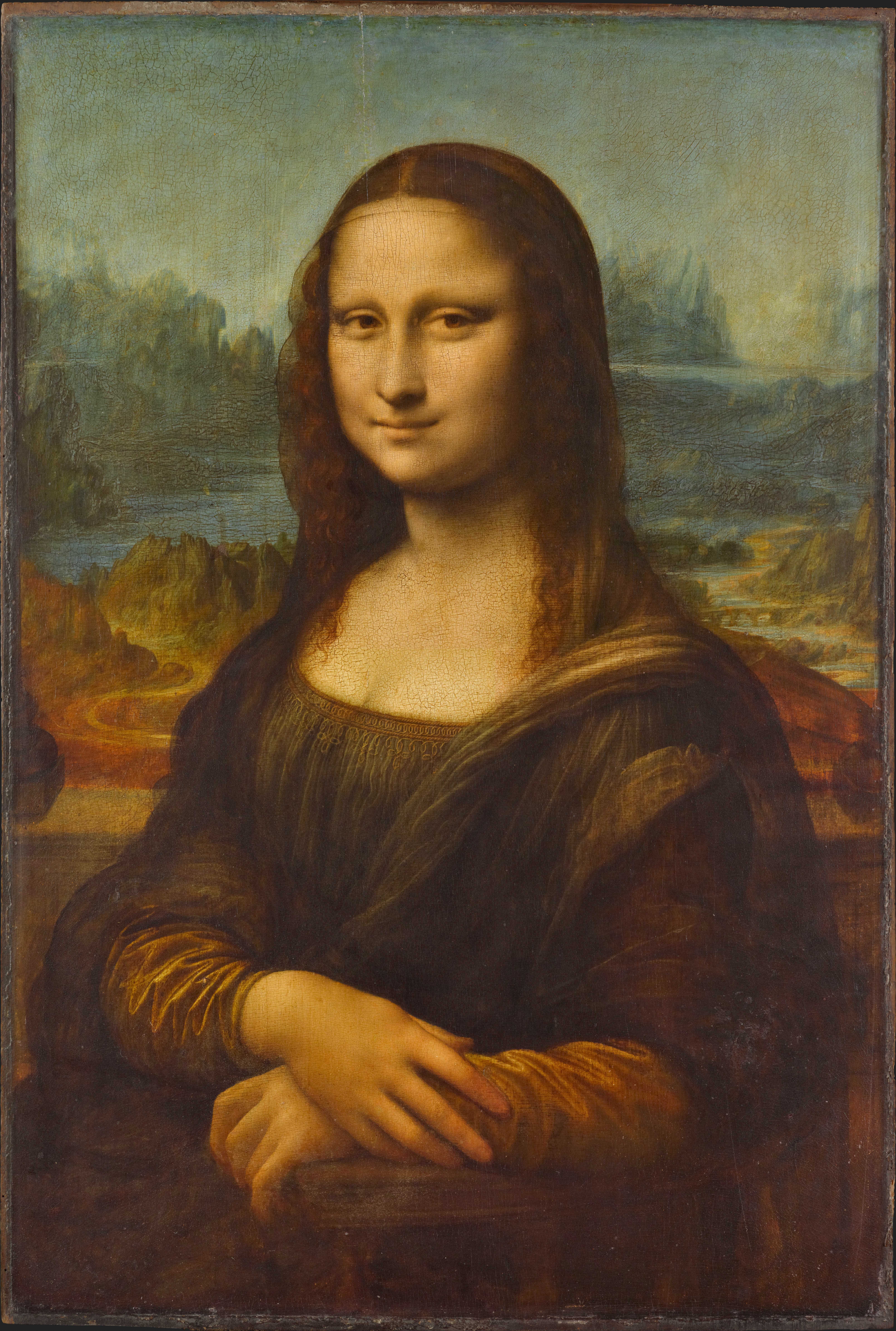
The Mona Lisa is not a work of simple genius. It is a work of synthesis—a fusion of art and science that no artist had ever attempted:
A smile that isn’t a smile.
Skin that isn’t painted, but breathes.
A landscape from another world.
A gaze that knows you.
You don’t have to be an art expert to know its greatness. But the true genius wasn’t in the what; it was in the how.
These effects aren’t just artistic choices; they are answers to scientific questions: How do muscles move a lip? How does air change distant objects? What forces shape a mountain?
So why was Leonardo obsessed with such mysteries?
Because the greatness of the Mona Lisa is the direct result of a single, learnable trait Leonardo cultivated to an obsessive degree—a trait we were all born with, but most allow to fade:
Insatiable curiosity.
Leonardo’s relentless curiosity
Leonardo’s notebooks are a testament to a mind that saw no boundaries, only questions. Between sketches of flying machines and studies of light, you find commands to himself:
“Describe the tongue of the woodpecker.”
And nearby, more questions:
“Why is the sky blue?”
“Observe the goose’s foot: if it were always open or always closed, the creature would not be able to make any kind of movement.”
“What makes people yawn?”
“What is the best way to square the circle?”
“What allows the aortic valve to close?”
He practiced saper vedere—“knowing how to see”—training himself to look at the world with a ferocious intensity.
Take his entry on “squaring the circle.” This ancient mathematical problem—creating a square with the exact same area as a given circle using only a compass and straightedge—was a known impossibility. Leonardo didn’t care. He filled page after page with dozens of attempts, not because he expected to succeed, but because the process of trying taught him new things about geometry, proportion, and the very nature of shapes.
This obsession didn’t stop at the abstract; it drove him to break the profound taboos of his age. In the 15th century, dissecting human bodies was strictly forbidden by law. Yet, under the cover of night, Leonardo would secretly obtain corpses from hospital morgues. This wasn’t morbid fascination; it was a desperate, scientific need to know about human anatomy. He needed to see for himself the muscles that pull a smile, the rock-work of the human spine, and the intricate, one-way flaps of the aortic valve.
Leonardo didn’t pursue knowledge for its usefulness; he pursued it for its own wonder. And in that pursuit, he unlocked the deepest secret of creativity: great ideas are the byproduct of connecting unrelated areas.
How Curiosity Made Mona Lisa
For decades, Leonardo spent his time asking questions that made no “practical” sense—dissecting corpses to understand a smile, sketching rivers to understand the flow of hair, mapping fossils to paint mountains that felt alive.
The Mona Lisa is where they all blossomed.
His curiosity created collisions, forcing unrelated fields to merge. Science met art. Form met emotion. Knowledge met imagination. Look at the painting again, but this time, see it through his eyes:
That famous, fleeting smile? They are the direct result of his anatomical studies and dissecting corpses. Da Vinci knew precisely which muscles and nerves controlled the lips, and that scientific knowledge allowed him to paint an expression so subtle it seems to live and change before our very eyes.
The incredible realism and soft, hazy quality? They come from his deep studies of optics. He pioneered the sfumato technique—using soft, blurred edges instead of sharp lines—because he observed that this is how we actually see the world, through an atmosphere that softens distant objects. This was a scientific observation applied as an artistic revolution. The question, ‘Why is the sky blue?’ planted the seeds that made him paint such a wonderful thing.
The alien landscape in the background? It is a product of his scientific mind. It is a world born from his intense geological studies, a landscape that feels primeval and alive because it is built on a real understanding of how water shapes the earth.
Leonardo didn’t need to understand heart valves or the blueness of the sky to paint a portrait. But his curiosity about everything is precisely what allowed him to create a portrait that was about everything—science, nature, and the depths of the human soul.
There’s one final secret: the Mona Lisa was never “finished.” Leonardo carried it with him for the rest of his life, from Italy to France, adding tiny, obsessive strokes. Why? Because his curiosity never stopped. As long as he was learning, there was more to see, more to add.
So start asking questions no one’s asking — and let unrelated insights collide until something new forms.
If you enjoyed my article, I would recommend you to take a look at the following ones:


Brilliantly written Andres. This isn’t just about art, it’s about the sacred fire of curiosity itself. Leonardo’s genius wasn’t in his brush, but in his wonder. He painted with questions, not answers. And that’s the real lesson here: when we stop trying to finish knowing, life itself becomes the masterpiece. Thank you for this article, I enjoyed reading it🙏